

PepsiCo is one of the largest food and beverage companies in the world. With iconic products like Pepsi, Lay’s, Gatorade, and Tropicana, its influence spans over 200 countries. The brand Pepsi has faced intense competition from Coca-Cola but continues to thrive through smart marketing.
This Pepsi case study highlights how strong branding, deep consumer insights, and memorable Pepsi advertising campaigns have helped the brand stay relevant. By focusing on innovation and connecting with the youth, PepsiCo has positioned itself as a bold, refreshing choice.
At the heart of the Pepsi case study lies adaptability. Whether it’s through quirky Pepsi ads in India, global music tie-ups, or environmentally conscious messaging, PepsiCo balances creativity and consumer needs. Its journey offers lessons in evolving brand identity, digital disruption, and emotional storytelling.
Let’s dive deeper into this Pepsi case study to uncover how its powerful campaigns and strategies shaped global pop culture and influenced beverage marketing.
Analysis of Key Pepsi Campaigns
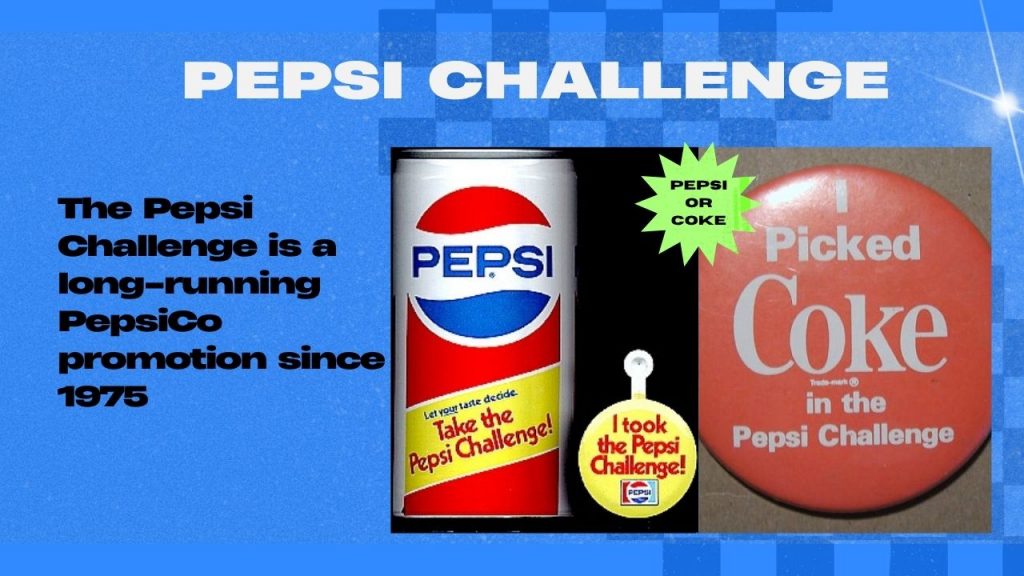
The Pepsi Challenge (1970s)
This bold move had people blindly choose between Pepsi and Coke, and most picked Pepsi. The campaign leveraged media buzz and public tastings to boost market share. It positioned Pepsi as the ultimate challenger brand and showcased how real feedback can reshape perception. Such bold marketing strategies of Pepsi highlight the power of consumer engagement and competitive positioning.
Live for Now (2012)
Targeting millennials, this campaign featured stars like Beyonc© and used hashtags like #LiveForNow. Pepsi ads in India focused on cricket, while global versions embraced local culture. Though engaging, the Kendall Jenner ad misstep taught Pepsi the importance of authenticity.
Is Pepsi OK? (2019)
Pepsi flipped a negative into a win by owning the “Is Pepsi OK?” question. A Super Bowl ad featuring Steve Carell, Cardi B, and Lil Jon turned doubt into humor. Through #MoreThanOK, bold branding, and a focus on social impact, the campaign became a hit. These innovative marketing strategies of Pepsi helped boost brand relevance and reshape public perception.
PepsiCo’s Broader Marketing Strategy & Mix (2025)
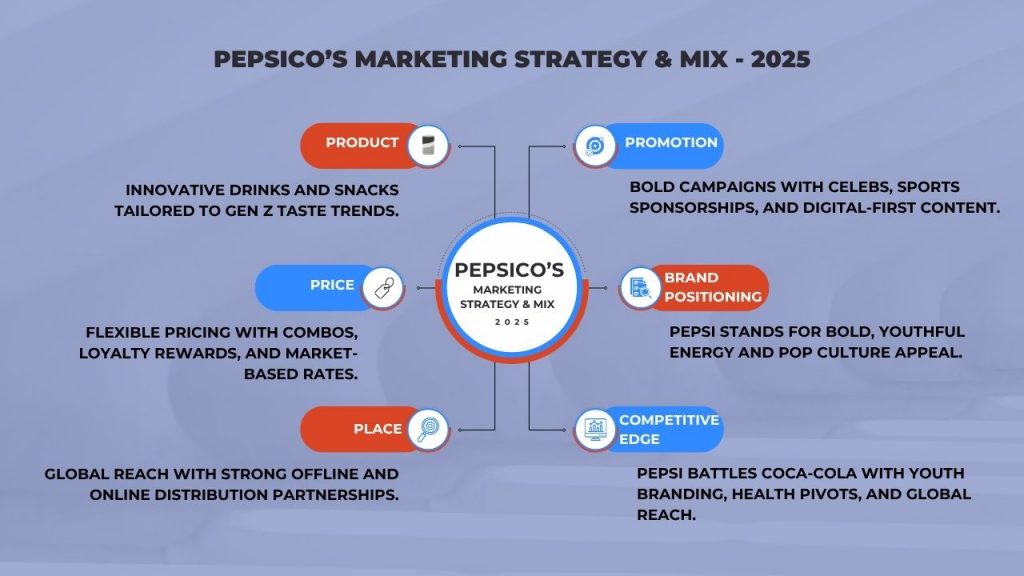
The Pepsi Case Study highlights how PepsiCo’s success stems from the smart use of the 4 Ps: Product, Price, Place, and Promotion, each tailored to evolving consumer trends. These core elements, when combined with the innovative marketing strategies of Pepsi, have played a key role in maintaining the brand’s global appeal and competitiveness.
Product
PepsiCo’s portfolio includes colas, sports drinks, snacks, and health-based items. Pepsi leads with Diet Pepsi, Pepsi Zero Sugar, and flavored variants, constantly innovating to meet Gen Z tastes.
Price
Pepsi uses a flexible pricing model that is competitive in mass markets and offers premium options in urban areas. Price promotions, combo offers, and loyalty rewards drive frequent purchases.
Place (Distribution)
PepsiCo operates in over 200 countries through direct delivery, warehouses, and third-party partners. It now partners with online retailers for fast delivery in metros, including in India.
Promotional Strategy of Pepsi
The promotional strategy of Pepsi relies on big-budget ads, celebrity endorsements, and digital campaigns, strengthened by events like UEFA sponsorships and Bollywood tie-ups to maintain global visibility.
Brand Positioning
Pepsi positions itself as bold, youthful, and energetic, targeting consumers aged 15 to 35. Its tone is playful, often tapping into pop culture and self-expression.
Competitive Edge
Pepsi competes closely with Coca-Cola, thriving on youth-centric branding and a strong global presence. While it faces challenges from health-conscious consumers and emerging local brands, the marketing strategies of Pepsi focus on innovation, healthier product options, and sustainability to maintain its competitive edge and global relevance.
The Pepsi Case Study highlights how the marketing strategy of Pepsi blends product innovation, digital-first promotions, and global-local execution to create a consistent brand experience worldwide.
PepsiCo’s Response to Modern Consumer Trends
PepsiCo has smartly adapted to shifting consumer values, especially health, sustainability, and social impact. The marketing strategies of Pepsi reflect this evolution, focusing on purpose-driven campaigns and product innovation to stay relevant in a changing market.
Health & Wellness
With more people choosing healthier options, PepsiCo expanded into zero-calorie drinks, low-sugar sodas, and plant-based snacks. Pepsi Zero Sugar and reduced-sugar variants reflect this shift, appealing to Gen Z and millennials prioritizing well-being.
Sustainability
PepsiCo’s pep+ initiative shows its environmental focus. It includes reducing plastic, conserving water, and sourcing ingredients responsibly. Eco-friendly packaging and greener production help boost its image in an eco-conscious market.
Community Engagement
PepsiCo now supports social causes, from nutrition education to farming aid. Partnering with NGOs and backing community programs improves trust and aligns with consumers seeking purpose-driven brands.
Digital Presence
Pepsi thrives on social platforms, using viral ads, celebrity tie-ups, and TikTok campaigns to stay engaging and relatable. The marketing strategies of Pepsi include interactive content and influencer marketing, helping the brand remain culturally relevant and top-of-mind for younger audiences.
By staying health-aware, eco-friendly, and socially responsible, PepsiCo proves its ability to evolve with changing times, ensuring strong connections with modern consumers.
Digital Marketing Domination
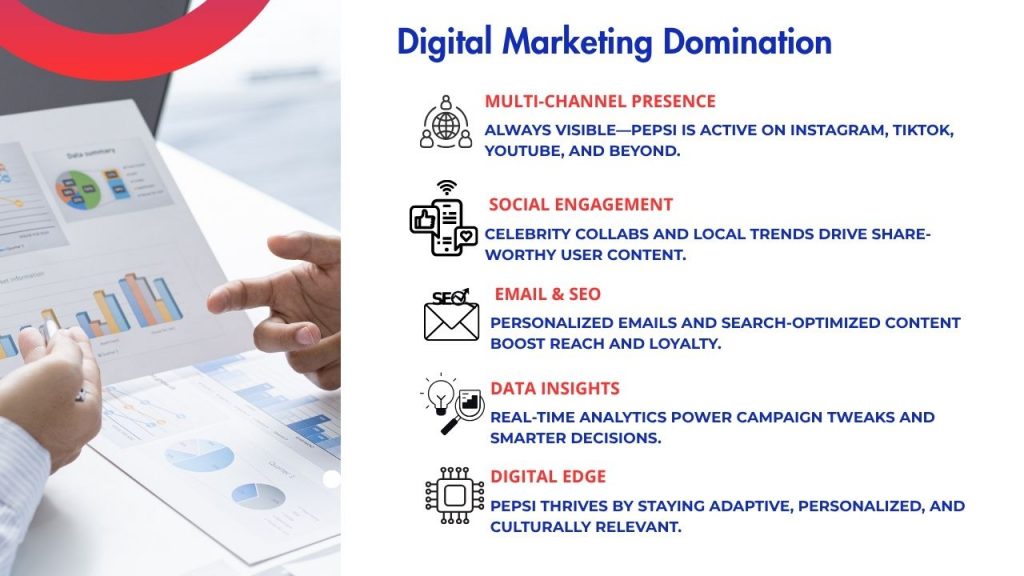
PepsiCo has mastered digital space, using it to boost visibility, engagement, and sales. The Pepsi Case Study reveals how the marketing strategy of Pepsi blends social media, email, SEO, and data analytics into one powerful approach.
Multi-Channel Presence
Pepsi cross media strategy ensures a strong presence across Instagram, Twitter, TikTok, and YouTube. Through paid ads and influencer tie-ups, the brand stays visible. Pepsi also blends digital and traditional media to deliver a seamless, omnichannel experience.
Social Engagement
The Pepsi social media marketing strategy leverages hashtags like #PepsiChallenge and celebrity partnerships to drive user-generated content. In markets like India, it localizes campaigns with cricket and Bollywood themes, making Pepsi both relatable and highly shareable.
Email and SEO Strategy
PepsiCo’s email campaigns are targeted and personalized, offering exclusive deals and sneak peeks. Meanwhile, its SEO tactics help it dominate search rankings, with optimized websites, mobile compatibility, and keyword-rich content boosting organic reach.
Data-Driven Decisions
Real-time analytics help PepsiCo monitor consumer behavior and campaign performance. Insights from tools allow quick tweaks, improving ROI and relevance. For instance, its Live for Now campaign evolved using real-time feedback.
Pepsi’s digital marketing strategy shines through its ability to adapt, personalize, and stay culturally relevant. This keeps campaigns fresh and consumers engaged.
Winning Selling Strategy
The Pepsi Case Study reveals that PepsiCo’s selling strategy goes beyond catchy ads—it’s rooted in deeply knowing Pepsi’s target audience and evolving with them, targeting young, energetic consumers aged 15 to 35.
Youth-Centric Targeting
PepsiCo markets heavily to Gen Z and millennials by tying into youth culture, music, sports, and entertainment. Campaigns like Live for Now reflect this positioning and create emotional connections.
Product Innovation
The brand keeps consumers engaged with frequent product updates. Launches like Pepsi Zero Sugar and seasonal flavors maintain excitement. Cross-promotions between snacks and drinks further boost brand appeal.
Celebrity Partnerships
Collaborations with icons like Beyonc© and sponsorships of major events like the Super Bowl make Pepsi a cultural staple. These partnerships build credibility and widen brand reach.
Data-Driven Marketing
PepsiCo uses data to track behavior and fine-tune messaging. Real-time insights from campaigns help optimize targeting and personalize experiences across platforms.
Market Adaptability
The brand adjusts quickly to trends like health-consciousness and sustainability. This agility keeps PepsiCo aligned with evolving consumer needs.
Pepsi’s success lies in staying youthful, innovative, and responsive. By blending product innovation, cultural relevance, and smart analytics, PepsiCo keeps its edge in a competitive market.
Key Learnings and Application
The Pepsi case study is packed with lessons that go far beyond fizzy drinks. The marketing strategy of Pepsi shows how a deep understanding of your audience, paired with digital savvy and cultural relevance, can lead to long-term success. Here are key takeaways brands can learn from:
1. Know Your Audience
Pepsi’s core focus on youth, especially those aged 15–35, has shaped its entire strategy. From music to sports, Pepsi taps into the interests and lifestyles of millennials and Gen Z.
Campaigns like Live for Now work because they speak directly to the audience’s emotions and aspirations. For other brands, the lesson is simple: study your audience, speak their language, and build campaigns around their world.
2. Embrace Digital Transformation
The Pepsi social media marketing strategy excels through digital mastery, leveraging Instagram posts, influencer campaigns, and interactive YouTube content. Through targeted ads and platform-specific engagement, PepsiCo connects with its core target audience: young, trend-conscious consumers, ensuring a strong presence wherever they spend time
For businesses today, being digitally visible is non-negotiable. Use SEO, social listening, and data-driven ads to strengthen engagement and brand presence.
3. Keep Innovating
Innovation is at the heart of PepsiCo’s success. The constant rollout of new Pepsi flavors, low-sugar alternatives, and snack pairings keeps the brand fresh.
Innovation doesn’t just mean product changes; it’s also about how you present and distribute them. Brands should stay agile and experiment regularly to meet evolving consumer tastes.
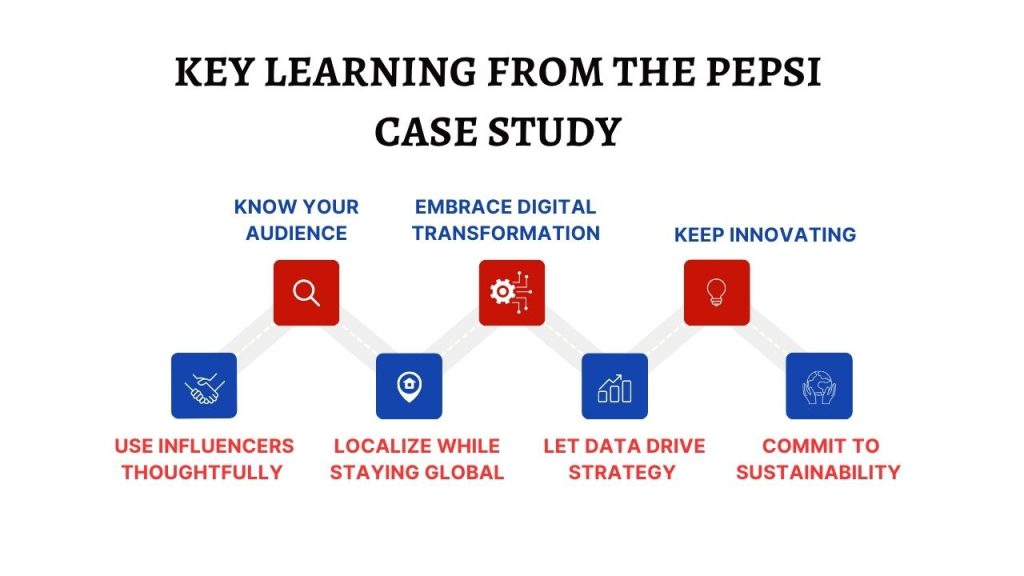
4. Use Celebrities and Influencers Thoughtfully
Pepsi’s partnerships with Beyonc©, Nicki Minaj, and Steve Carell have amplified its visibility and cultural relevance. But the Kendall Jenner ad backlash also highlighted the risk of inauthentic messaging.
The takeaway?
Influencers must align with your values and resonate with your audience. Choose partners who enhance, not dilute, your brand identity.
5. Localize While Staying Global
Pepsi’s global marketing strategy adapts campaigns to different regions without losing brand essence. In India, it celebrates cricket, while in Latin America, it taps into football culture.
For global brands, localization is vital; messaging must suit regional interests while maintaining brand consistency across markets.
6. Let Data Drive Your Strategy
PepsiCo heavily relies on data analytics to refine campaigns, track consumer behavior, and personalize experiences. From purchase trends to social media responses, insights shape smarter decisions.
Any business, regardless of size, should leverage tools like Google Analytics, CRM systems, and customer surveys to guide marketing and product development.
7. Stay Committed to Sustainability
Through initiatives like PepsiCo Positive (pep+), the company is focusing on sustainable practices, cutting plastic use, reducing emissions, and conserving water. These efforts not only meet environmental needs but also resonate with younger, eco-conscious buyers.
Today’s consumers expect brands to care about the planet. A genuine sustainability commitment builds trust and long-term loyalty.
The Pepsi Case Study shows that PepsiCo’s strategy goes beyond flashy ads; success comes from knowing your audience, embracing innovation, staying culturally relevant, and using data wisely.
Combined with authenticity and sustainability, these tactics create a powerful blueprint any brand can follow to thrive in today’s competitive market.
Conclusion
The Pepsi case study shows how smart branding, digital focus, and constant innovation help PepsiCo stay ahead. Its bold Pepsi campaigns, celebrity tie-ups, and focus on youth culture drive engagement.
With sustainability efforts and localized ads like Pepsi ads in India, Pepsi connects deeply with audiences. The brand’s success lies in blending creativity, data, and customer-first thinking.
FAQs
1. What is Pepsi’s core marketing strategy?
Pepsi focuses on youth-centric branding, lifestyle marketing, and emotional connections.
2. How does Pepsi use advertising campaigns?
Pepsi uses celebrity endorsements, catchy slogans, and memorable ad campaigns to stay relevant.
3. What digital marketing strategies does Pepsi follow?
Pepsi leverages social media, influencer collaborations, and interactive campaigns online.
4. How does Pepsi compete with Coca-Cola in marketing?
Pepsi emphasizes fun, energy, and pop culture to differentiate itself from Coca-Cola.
5. What can brands learn from Pepsi’s marketing strategy?
Consistency, innovation, and cultural relevance are key to Pepsi’s global success.