


If your website were a closet, a content audit strategy would be the “big clean-up day” when you pull everything out, check what still fits, and toss what’s collecting dust. Over time, content piles up; blog posts, landing pages, videos, guides, and some of it quietly becomes outdated, irrelevant, or underperforming.
A content audit strategy is your chance to look under the hood and see what’s really going on. It’s like spring cleaning for your online presence, except instead of finding that sweater from 2009, you might find a blog post that hasn’t had a visitor in two years.
When you skip this step, you end up with a messy site, frustrated visitors, and missed opportunities. But when you make it a regular habit, your website stays sharp, search engines love you, and your audience keeps coming back for more.
So, in this guide, we’re going to walk through everything you need to know from what a content audit strategy actually is, to how to do it, what to watch out for, and how to make the process smooth and even (dare I say) enjoyable.
What is a Content Audit?
Think of a content audit strategy like a health check-up for your website. You’re not just glancing at it and saying, “Yep, still breathing.” You’re digging into each piece of content: blog posts, product pages, videos, downloads, and asking, “Is this still doing its job?”
In simple terms, a content audit strategy is the process of taking stock of all the content you have, analyzing how it’s performing, and deciding what to keep, update, or delete. It’s not about judgment, it’s about making sure every piece you’ve published is still useful, relevant, and aligned with your goals.
For example, maybe you wrote a “Top Social Media Tips for 2018” article. It was great back then, but now? It’s like a flip phone – cute, nostalgic, but not exactly helpful. A content audit strategy helps you spot those outdated gems and either give them a makeover or gracefully retire them.
And here’s the kicker: it’s not just for SEO writing. A content audit strategy can uncover hidden opportunities, plug gaps in your topics, and improve user experience. Done right, it’s like giving your content strategy superpowers.
Benefits of a Content Audit Strategy
A content audit strategy isn’t just busywork; it’s one of those behind-the-scenes moves that can completely change how your site performs. Think of it like a tune-up for your car; it might not be flashy, but it keeps everything running smoothly and efficiently.
Here’s why it’s worth the effort:
- Boosts SEO performance
Search engines love fresh, relevant, and well-structured content. On-page SEO tactics like updating old posts, fixing broken links, and optimizing keywords improve your site’s authority, while off-page SEO strategies help boost your rankings even further.
- Improves user experience
Visitors find the information they want faster when outdated or irrelevant content is cleaned up. A tidy site keeps people engaged and lowers bounce rates.
- Increases conversions
Content that’s updated and aligned with current offers is more persuasive, helping you turn curious visitors into loyal customers.
- Saves time and resources
Instead of constantly creating new content from scratch, you can repurpose existing material, saving effort while still providing value.
- Strengthens your brand image
A well-maintained website signals professionalism, authority, and care, making you more trustworthy in your audience’s eyes.
In short, a content audit strategy helps you work smarter, not harder. It’s about making the most of what you already have before adding more to the pile.
Content Audit Checklist
Before diving in, it helps to have a game plan. A content audit strategy can feel overwhelming if you don’t know where to start, like trying to clean your whole house without a checklist. So here’s a simple roadmap to keep you on track:
Set clear goals
Decide what you want from this audit. More traffic? Better conversions? Cleaner navigation? Your goals will guide every decision.
List all your content
Create a spreadsheet with every page, blog post, video, and downloadable asset. Tools like Screaming Frog or Google Search Console can make this easier.
Gather performance data
Pull in metrics like page views, bounce rate, time on page, backlinks, and conversions. This is your “vitals” report for each piece.
Review content quality
Check for relevance, accuracy, and readability. Outdated facts, broken images, and clunky text should go on your “needs attention” list.
Assess SEO health
Look at keywords, meta titles, descriptions, headings, and internal links. Fixing these can make a big difference fast.
Categorize actions
Mark each item as “Keep,” “Update,” “Repurpose,” or “Remove.” This keeps things simple when you start making changes.
Document your findings
Keep your spreadsheet updated with notes, action steps, and deadlines so you can track progress over time.
With this checklist, your content audit strategy becomes a step-by-step process instead of a never-ending mystery.
How to Do a Content Audit?
Now that you’ve got your checklist, let’s turn it into action. Doing a content audit strategy isn’t complicated; it’s just a series of steps that build on each other.
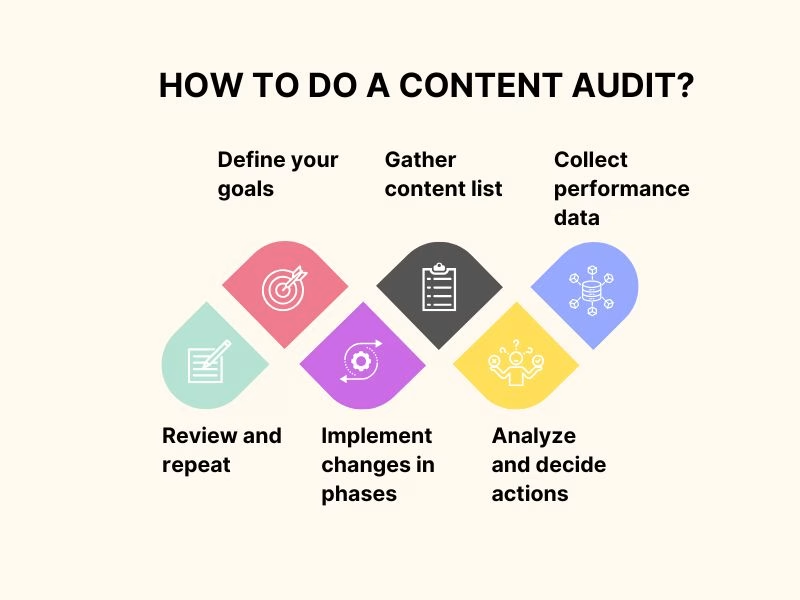
Think of it like cooking a recipe: follow the steps, and you’ll get a tasty result.
Define your goals
Ask yourself, “What do I want from this audit?” If you want better SEO rankings, you’ll focus more on keywords. If you want higher lead conversions, you’ll look closely at calls to action.
Gather your content list
Use tools like Google Analytics, Search Console, or Screaming Frog to pull all your URLs into a spreadsheet. This is your “master list.”
Collect performance data
For each piece, note down metrics like traffic, average time on page, bounce rate, and conversions. These numbers will help you make informed choices.
Analyze and decide actions
Go through each item and decide: keep as-is, update with fresh info, repurpose content into a different format, or remove completely.
Implement changes in phases
Don’t try to fix everything in one day. Prioritize high-impact changes first, like refreshing popular but outdated posts.
Review and repeat
After making updates, check the results in a month or two. Then schedule your next content audit strategy so it becomes part of your ongoing strategy.
With this method, you’ll not only clean up your site but also uncover hidden opportunities to boost performance.
Common Mistakes to Avoid
A content audit strategy is pretty straightforward, but there are a few potholes you’ll want to dodge if you don’t want to waste time or lose momentum.
- Skipping clear goals
Jumping in without knowing why you’re auditing is like going on a road trip without a map; you’ll end up somewhere, but maybe not where you wanted to be.
- Focusing only on SEO
Yes, keyword research and rankings matter, but don’t forget about your readers. A piece might be SEO-perfect but still confusing or unhelpful to humans.
- Over-analyzing low-value content
Not every outdated FAQ or tiny blog post needs deep analysis. Focus your energy on high-traffic or strategic pages first.
- Not following through
Collecting all your findings but never making changes is like buying gym equipment and using it as a clothes rack. The real magic happens when you take action.
- Doing it once and forgetting about it
A content audit strategy isn’t a “one-and-done” task; it works best when it’s part of your regular content strategy, like every 6–12 months.
Avoid these pitfalls, and your audit will be faster, smoother, and much more impactful.
Conclusion
A content audit strategy might not sound glamorous, but it’s one of the smartest moves you can make for your website. It’s the difference between a site that’s bloated, outdated, and underperforming, and one that’s lean, relevant, and working hard for you.
By regularly reviewing, updating, and pruning your content, you’re not just improving SEO; you’re giving your audience a better experience and making your brand look polished and trustworthy.
The beauty is, you don’t have to tackle it all in one marathon session. Break it into manageable chunks, follow the checklist, and you’ll start seeing wins faster than you expect.
Think of your content as a garden: if you tend to it, remove the weeds, and feed the healthy plants, it will flourish. Neglect it, and it’ll become an overgrown mess. A content audit strategy is just your way of making sure the garden keeps blooming.
So, grab that spreadsheet, roll up your sleeves, and start your audit. Your future self and your audience will thank you.
FAQs
1. What is a content audit strategy?
It’s a process of analyzing and improving website content for SEO and user experience.
2. Why is a content audit important for websites?
It identifies outdated, underperforming, or duplicate content that needs fixing.
3. How often should I conduct a content audit?
At least once or twice a year, or after major website changes.
4. What tools help in running a content audit strategy?
Tools like Screaming Frog, Ahrefs, SEMrush, and Google Analytics are useful.
5. Can a content audit boost website growth?
Yes, by cleaning and optimizing content, it improves rankings, traffic, and engagement.