


Learn how to write a report with clear steps, structure, types, and examples. Perfect for students and professionals who want simple, effective reports.
We all get asked to write reports at some point, whether it’s at school, at work, or for a project. But most people dread it. Why? Because writing a report sounds formal, complicated, and maybe a bit boring. But it doesn’t have to be.
Learning how to write a report is like learning to follow a recipe. Once you know the structure and what ingredients you need, it gets easier every time. And just like cooking, the more you practice, the better it turns out.
Imagine you’re working on a group project. Everyone has ideas, but they’re all over the place. A report brings it all together in a neat, clear format that anyone can understand. It tells people what’s going on, what was found, and what needs to happen next.
In this guide, we’ll go through simple, clear steps to help you write a report that makes sense and gets the job done without all the fuss.
What Is a Report?
A report is a written document that presents information in a clear and organized way. Think of it like a map; it helps people understand what’s happening, where things stand, and what should happen next. It’s not about opinions or fluff; it’s focused on facts, findings, and useful recommendations.
So, why do we write a report? The main purpose is to explain something clearly. Reports help analyze data, track progress, share research, or suggest solutions to problems. For instance, a student might write a report on a science experiment, while a company may prepare one to review monthly sales or performance.
There are many types of reports depending on the context, like research reports, project reports, technical reports, or business reports. Even a weather report or a police report counts.
No matter the type, whenever you write a report, the goal is the same: to share useful information that helps people make better decisions or understand a situation more clearly.
Why Reports Are Important
Reports might seem a bit dull at first, but they’re incredibly useful. When you write a report, you’re not just putting words on paper; you’re creating something that keeps things organized and helps everyone stay informed.
Here’s why reports matter:
They help people make smart decisions based on facts, not guesses.
They record what happened, creating a clear, reliable history.
They highlight progress or reveal problems in a task or project.
They keep teams, managers, and stakeholders on the same page.
Think about it, trying to explain a complicated project in a quick chat can lead to confusion. But when you write a report, you bring clarity, structure, and all the important details together in one place.
Different Types of Reports
Reports come in all shapes and sizes. The kind you write depends on who you’re writing for and what they need to know.
Let’s take a look at some different types of reports you might come across:
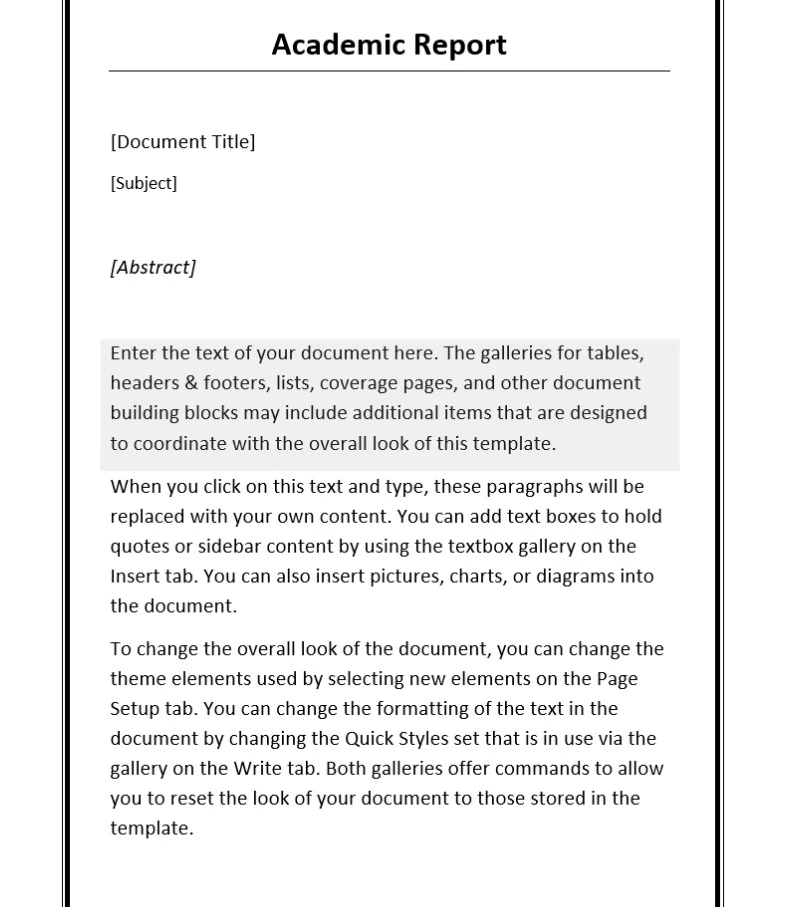
Academic Reports
These are used in schools or universities, like lab reports, research papers, or project summaries. When students write a report for class, it usually follows a set format and includes citations.
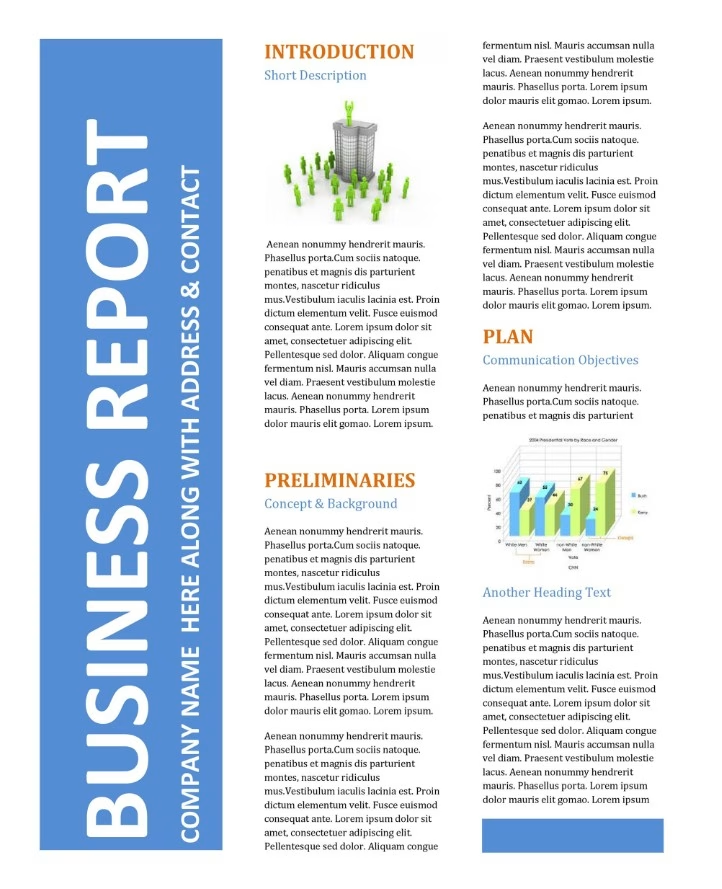
Business Reports
Used in workplaces to share updates, results, or recommendations. Think sales reports, marketing performance reports, or annual summaries.
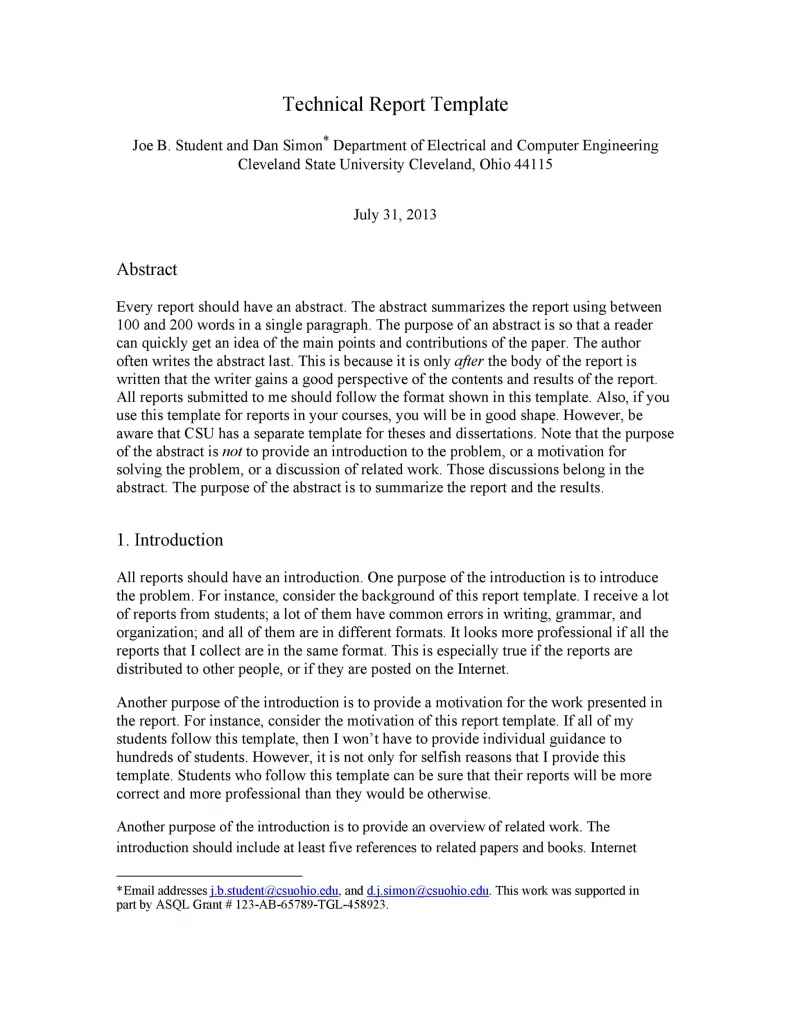
Technical Reports
Written by engineers, scientists, or IT professionals. They explain processes, systems, or findings in a way that technical readers can understand.
Research Reports
These document investigations or studies, often in science or social research. When you write a report like this, the goal is to share findings in detail.

Informational Reports
These just present facts, no opinions or conclusions. For example, a report showing attendance data.
Analytical Reports
These go deeper. They explore facts and then offer conclusions or suggestions based on the data.

You might also write a report that’s informal, incident-based, or from fieldwork, each serving a specific need. No matter the type, they all help deliver information clearly and usefully.
Each type has its own purpose, but they all aim to inform clearly. Knowing the right one to use helps your writing hit the mark.
Structure of a Report
A clear report format helps readers understand your message without getting lost. Most reports follow a simple structure with sections that each serve a specific purpose.
Basic Structure of a Report:
- Title Page – Includes the title, your name, date, and any relevant info.
- Table of Contents – Lists each section and page number for easy navigation.
- Executive Summary – A short summary of the whole report. It’s written last but placed up front.
- Introduction – Explains what the report is about and why it was written.
- Methodology – Describes how you collected your data or information.
- Findings/Results – The key facts, numbers, or observations you discovered.
- Discussion/Analysis – Explains what the results mean and why they matter.
- Conclusion – A quick recap of the main points—no new information here.
- Recommendations – Suggestions or actions based on your findings (if needed).
- References – List sources or materials you used.
- Appendices – Extra information that supports your report, like charts or interviews.
Keeping this format makes your report easier to read and more professional.
Steps for Writing a Report
Writing a report might sound overwhelming, especially if you haven’t done it before. But don’t worry, it’s a lot easier once you break it down into steps. Here’s a simple guide to help you understand exactly how to write a report without stress.
Understand the Purpose of Your Report
Before typing a single word, be clear about why you’re writing.
Is it for a school assignment? To present project results at work? Maybe to share research findings?
Understanding the purpose helps you decide what to include and what to leave out.
Know Who You’re Writing For
Your audience matters. If it’s for your teacher, you’ll need to use a more formal tone and probably follow strict formatting. For a company report, your tone might be more practical and businesslike. Always ask yourself, “Who will read this, and what do they need to know?”
Research and Collect Information
This is one of the most important steps for writing a report. Gather all the data, facts, or quotes you’ll need. Use reliable sources like books, articles, surveys, or interviews. Take good notes and keep track of where each piece of information comes from you’ll need that for your references later.
Organize and Plan Before Writing
Don’t jump straight into writing. First, create
an outline using the standard report format (title, intro, findings, etc.). Jot down what each section should contain. This makes it way easier to write clearly and stay on track.
Start Writing Your First Draft
Now it’s time to write! Don’t worry about making it perfect at first, just focus on getting your ideas down. Use short, clear sentences. Keep paragraphs focused, and use headings or bullet points to break up long sections. Avoid fluff or filler.
Revise, Edit, and Improve
Once your draft is done, take a short break, then come back to it with fresh eyes. Read it aloud. Fix grammar mistakes, awkward phrasing, or sections that don’t flow well. Check if each part supports your main point. Make sure the tone matches your audience and purpose.
Format the Report Neatly
Presentation matters. Make sure your fonts, headings, and spacing are consistent. Add page numbers, double-check your title page, and make sure your report is easy to navigate. A polished look shows effort and professionalism.
Add References and Appendices (If Needed)
If you used outside sources, include a reference list at the end. Follow the required style guide (APA, MLA, etc.). Appendices are great for adding charts, transcripts, or extra data without cluttering the main sections.
By following these straightforward steps for writing a report, you’ll be able to produce something that’s clear, organized, and effective. Like any skill, report writing gets easier the more you practice. Take it one step at a time, and soon, you’ll be writing reports like a pro.
Conclusion
Now that you know how to write a report, it doesn’t seem so intimidating, right? Just remember to keep things clear, organized, and to the point. Whether it’s for school, work, or a project, a well-written report helps people understand facts and make smart choices.
Follow the steps, stick to the structure, and always write with your audience in mind. The more you practice, the easier it gets. Soon, writing reports will feel like second nature, just another skill in your toolkit.
FAQs
1. What is the purpose of writing a report?
It communicates information clearly to analyze, evaluate, or recommend actions.
2. What are the key elements of a report format?
Title, introduction, body, findings, conclusion, and recommendations.
3. How should a report be structured?
In a logical flow with headings, subheadings, and organized sections.
4. What is the writing process for a report?
Research, plan, draft, edit, and finalize the document systematically.
5. How can I make my report more effective?
Use clear language, visuals, bullet points, and concise explanations.